![Flâneurdec[k]](https://substackcdn.com/image/fetch/$s_!o0qh!,w_120,h_120,c_fill,f_webp,q_auto:good,fl_progressive:steep/https%3A%2F%2Fbucketeer-e05bbc84-baa3-437e-9518-adb32be77984.s3.amazonaws.com%2Fpublic%2Fimages%2Fc26e4546-6d4f-4390-a826-f78f7b340047_500x500.png)
![Flâneurdec[k]](https://substackcdn.com/image/fetch/$s_!eeGq!,w_144,h_144,c_fill,f_auto,q_auto:good,fl_progressive:steep,g_auto/https%3A%2F%2Fsubstack-post-media.s3.amazonaws.com%2Fpublic%2Fimages%2F44d0d7f0-511a-4f1b-9c9c-e6efdd1c5b83_1400x1400.png)

1. Introduction: Bridging the Gap in Global Logistics
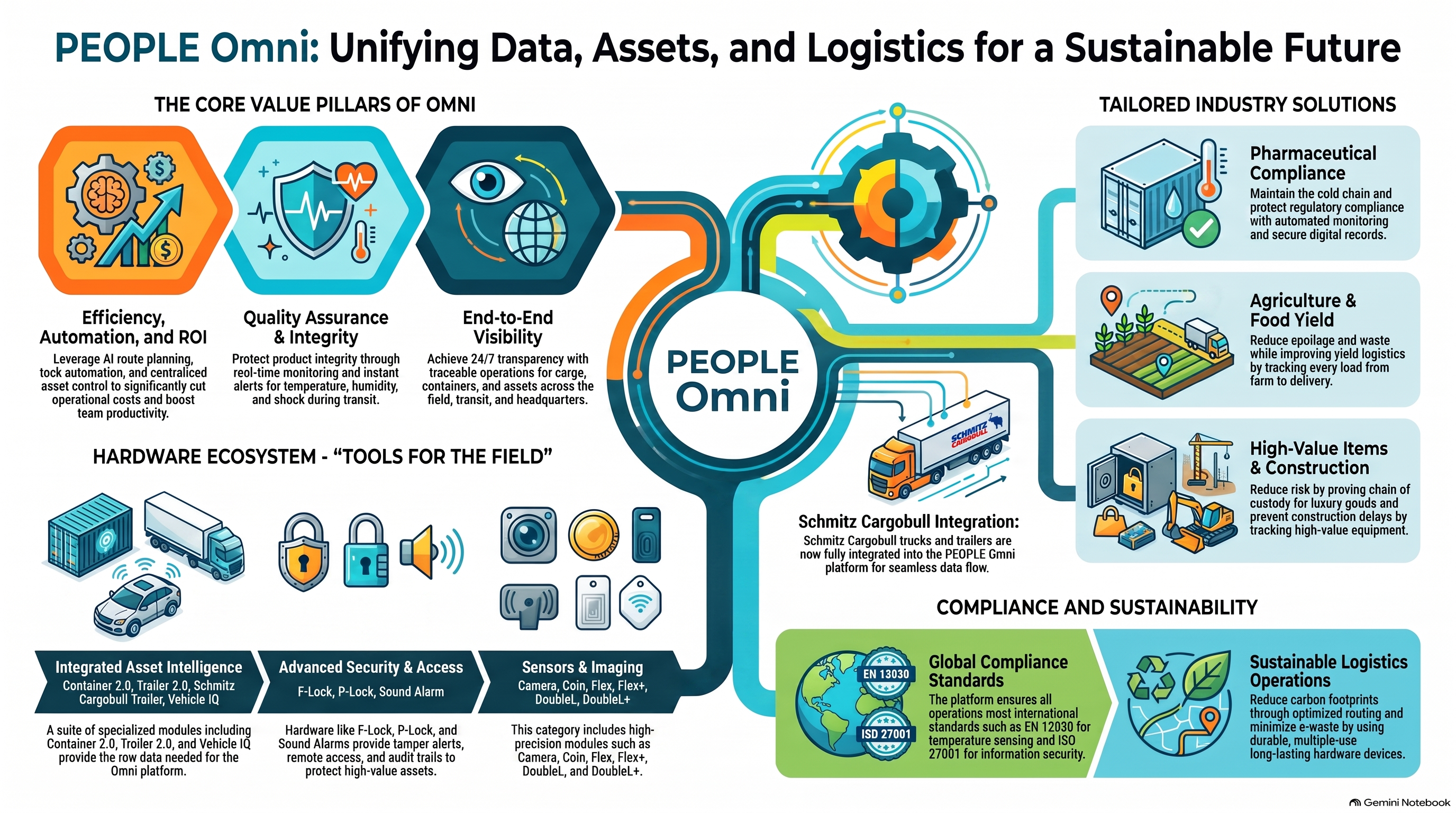
In the modern supply chain, the distance between high-level strategic goals and ground-level execution is often vast. To bridge this gap, the People1 ecosystem provides a comprehensive infrastructure where Omni—the specific digital interface—functions as the central brain. The “Logistics Value Map” is a curriculum framework designed to help supply chain leaders connect macroscopic industry challenges (such as food waste or theft) to the microscopic technological “nerves” (sensors and modules) that provide the remedy.
Key Insight: From Guessing to Knowing The fundamental evolution of modern logistics is the shift from “guessing” to “knowing.” Legacy systems rely on assumptions of cargo safety based on departure and arrival times. Unified data platforms provide real-time proof of integrity, transforming logistics from a reactive cost center into a proactive, high-performing, and sustainable source of competitive advantage.
To master these digital solutions, one must first analyze the specific economic and operational objectives driving individual global sectors. How do these high-level goals dictate the technical requirements of the platform?
2. Industry Blueprint: Challenges and Strategic Objectives
While every supply chain shares a need for speed, the underlying “pain points” vary significantly by industry. Understanding these distinctions is the first step in mapping a digital solution.
Table 1: Industry-Specific Logistics Goals
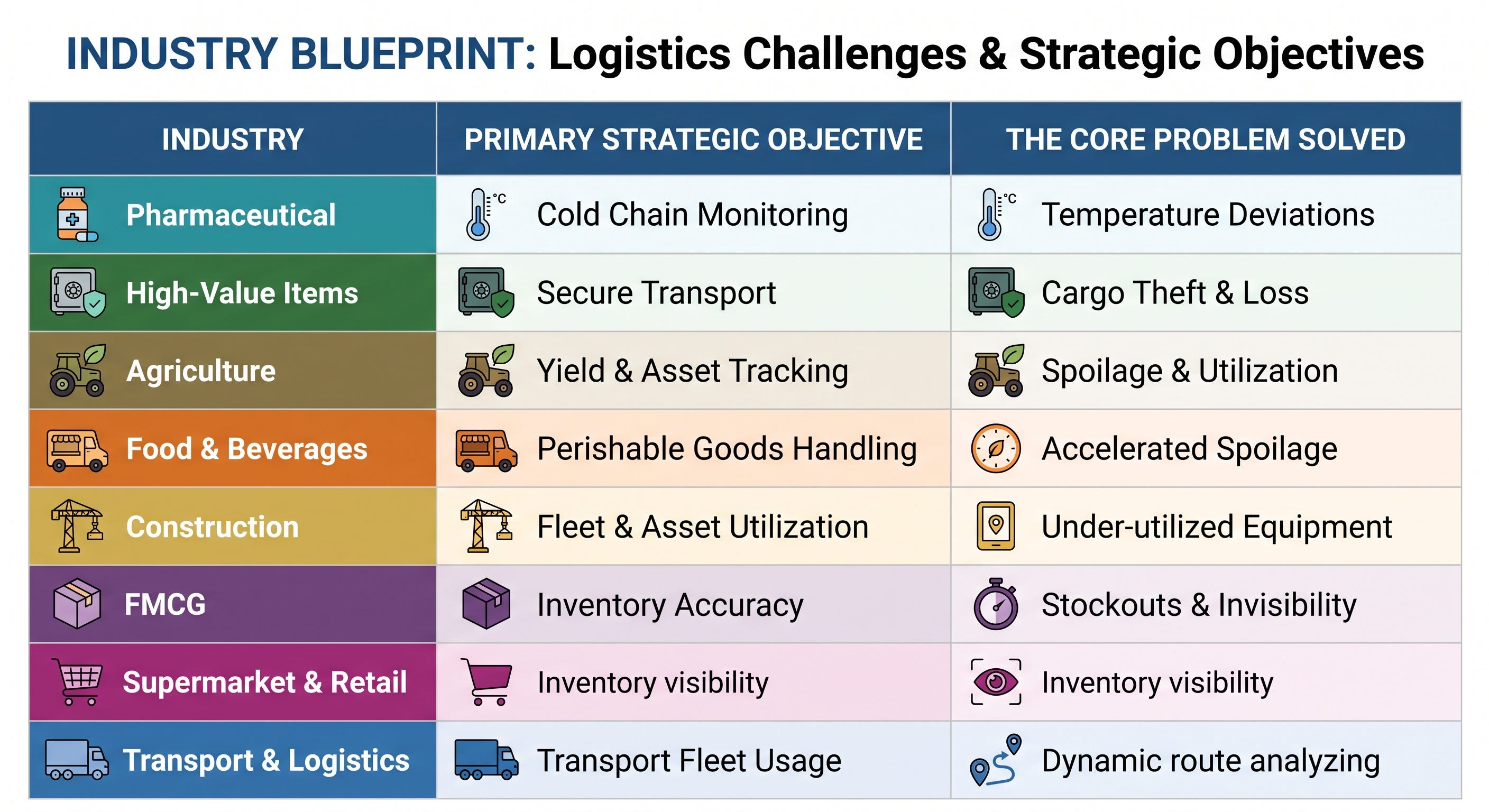
Meeting these diverse objectives requires a sophisticated digital "nervous system" capable of providing real-time field intelligence.
3. The Digital Nervous System: Monitoring & Intelligence
The Omni platform acts as a central nervous system, utilizing sensors to monitor the biological and physical “health” of a shipment. This data is not just informative; it is an economic safeguard.
Environmental Monitoring
Capabilities: Continuous real-time tracking of Temperature and Humidity.
The “So What?”: This eliminates the need for manual log checks and prevents total shipment rejection by providing automated, audit-ready proof of cold chain maintenance.
Physical Integrity
Capabilities: Instant alerts for Shock, Tilt, Motion, and Door status.
The “So What?”: By capturing exactly when and where an impact occurs, companies can dramatically reduce insurance premiums and assign financial liability with surgical precision.
Security & Access
Capabilities: Smart locks, Tamper alerts, Photo evidence, and Drone surveillance.
The “So What?”: This creates an unalterable digital audit trail, mitigating the risk of “inside-job” theft and reducing the human resources required for manual security checks.
These streams of intelligence are generated by a robust hardware toolkit designed to survive the harshest field conditions.
4. The Hardware Toolkit: From Field Modules to Intelligence
Hardware modules are the physical sensory organs of the Omni platform. By grouping these tools by their functional role, we can see how they address specific operational hazards.
Problem: Unsecured Cargo or High-Risk Transit
Tool: F-Lock / P-Lock / Sound Alarm
Benefit: Provides remote-controlled physical access and an audible deterrent, effectively lowering the risk of cargo-related insurance claims.
Problem: Environmental Spoilage & Regulatory Compliance
Tool: Coin / Flex / Flex+ / DoubleL / DoubleL+
Benefit: Automates the collection of environmental data, removing human error from the compliance process and ensuring product viability.
Problem: Asset Invisibility & Under-utilization
Tool: Container 2.0 / Trailer 2.0 / Vehicle IQ
Benefit: Enables 24/7 traceability of assets, allowing fleet managers to maximize “uptime” and reduce the capital expenditure of purchasing excess equipment.
Problem: Lack of Visual Verification
Tool: Camera / Drone Surveillance
Benefit: Delivers undeniable visual evidence of cargo condition, simplifying the dispute resolution process with carriers and clients.
Strategic Integration: The Schmitz Cargobull Fleet A critical milestone in unified logistics is the integration of Schmitz Cargobull trucks and trailers directly into the Omni platform. This allows heavy-duty transport assets to be managed alongside smaller modular sensors within a single interface, eliminating data silos across the fleet.
5. The Omni Platform: Unifying People, Assets, and Data
The Omni platform serves as the intelligent interface that synthesizes field data into actionable insights. Its value is built upon three strategic pillars:
Efficiency & ROI: Through AI-driven route planning and task automation, Omni reduces operational friction. By identifying the most efficient paths and automating repetitive reporting, it directly lowers the cost per mile and boosts overall labor productivity.
Compliance: Omni ensures that organizations meet rigorous international standards, including EN 12830 (temperature recorders for transport) and ISO 27001 (information security management), protecting the organization from legal and financial penalties.
Sustainability: Unlike competitors using “single-use” trackers that contribute to global waste, Omni utilizes durable, multiple-use, and long-lasting devices. This hardware longevity, combined with optimized routing to lower emissions, transforms logistics into a greener, more circular operation.
“Unified Visibility” is the platform’s ultimate output, allowing a manager to view field operations, transit status, and HQ logistics in one synchronized window.
6. Summary: The Value Chain in Action
The “Logistics Value Map” proves that technical features only matter when they serve a strategic goal. Below are four examples of this logic in practice.
Table 2: Value Synthesis
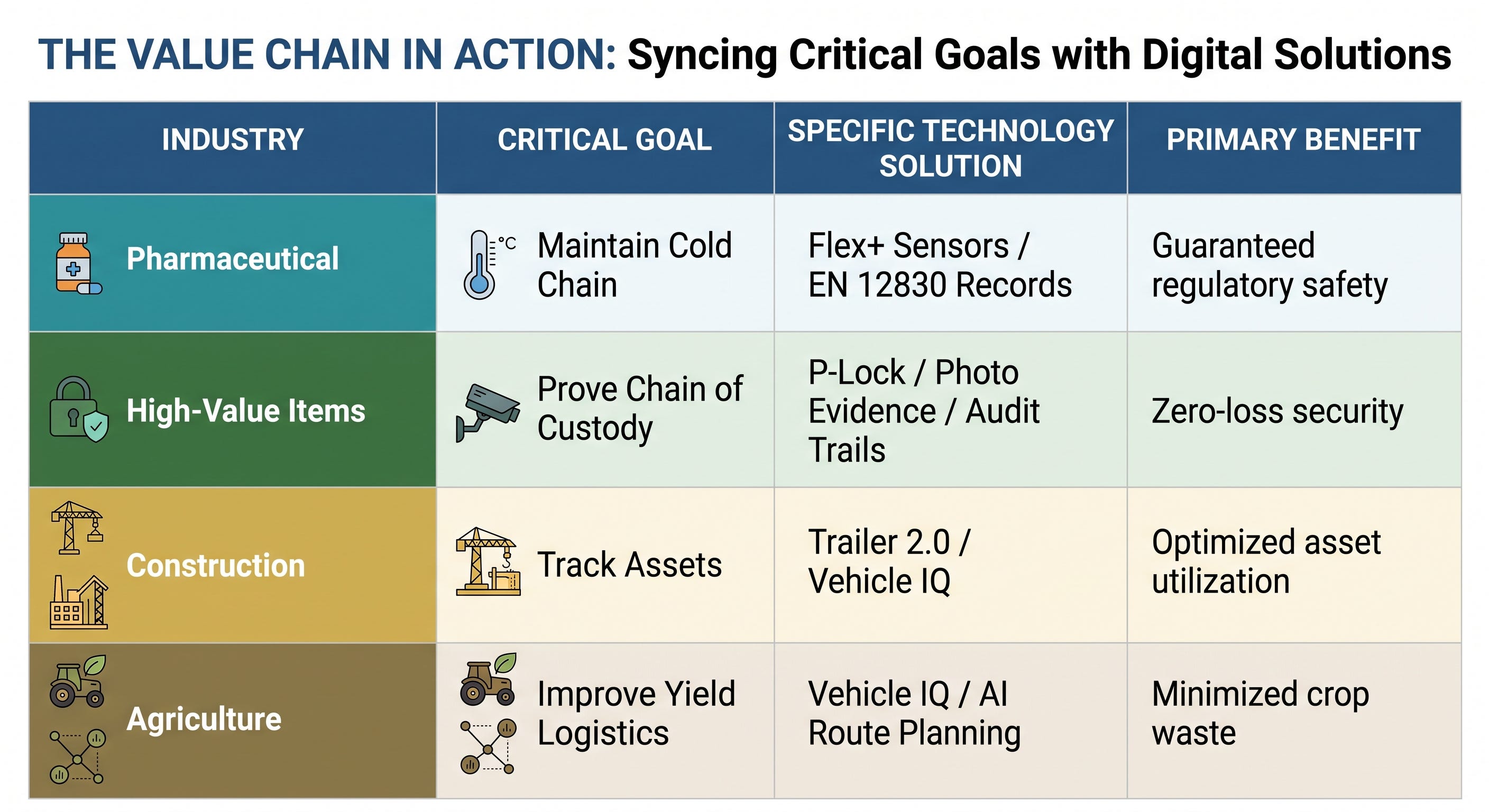
Closing By integrating physical hardware with a centralized AI platform, the People ecosystem transforms logistics from a series of blind spots into a transparent, traceable value chain. These digital solutions allow modern enterprises to protect their assets, their bottom line, and the environment simultaneously, securing a sustainable future for global trade.
I believe in transparency. So, heads up: some links in this review are affiliate links. If you purchase them, I may earn a small commission (at no extra cost to you!). It helps me keep the lights on and create more helpful content like this.
![Flâneurdec[k]](https://substackcdn.com/image/fetch/$s_!eeGq!,w_96,h_96,c_fill,f_auto,q_auto:good,fl_progressive:steep,g_auto/https%3A%2F%2Fsubstack-post-media.s3.amazonaws.com%2Fpublic%2Fimages%2F44d0d7f0-511a-4f1b-9c9c-e6efdd1c5b83_1400x1400.png)


